Hair Care: 90% Less Frizz with Smart Co-Washing Tips
"Stop fighting your natural texture and start working with it." If you spend every morning wrestling with a flat iron only to have your hair puff up into a frizz cloud by noon, you aren't alone. The secret isn't more heat; it's better hydration and smarter drying.
* Moisture is Key: Curly hair thrives on hydration, not harsh detergents. Co-washing is often the best strategy. * The Drying Method Matters: Skip the rough towel. Using a microfiber cloth or cotton T-shirt during the "plopping" phase is essential for curl definition. * Know Your Hair Type: Different curl patterns (coilier vs. wavy) require different cleansing frequencies to maintain health. * Seal the Deal: Proper finishing techniques (like gentle scrunching when 100% dry) set the curl pattern and prevent frizz.
Why Does My Curly Hair Get Frizzy?
I remember standing in front of my bathroom mirror at 7:15 AM, staring at a tangled mess that looked more like a bird's nest than intentional curls. I thought the only way to look "put together" was to straighten it, but that just left my ends feeling like straw.
Frizz is often caused by the hair cuticle lifting, which happens when the hair is dehydrated or exposed to harsh chemicals. When the cuticle—the outer layer of your hair shaft—is raised, it seeks moisture from the air, causing the hair to swell and lose its shape.
Hair texture varies significantly by ancestry. For example, African hair shape is predominantly curly, making up 94.9% of that hair type, while European hair shape is most often wavy at 46.6% or straight at 40.7%.
A high incidence of non-straight fibers (greater than 50%) is observed in individuals of European and Asian ancestry.
Recognizing your specific pattern is the first step to stopping the frizz. Whether your hair is fine, coarse, wavy, or tightly coiled, your maintenance schedule must change to match your hair's unique needs.
When I first started managing my curls, I was surprised by how much humidity affected my texture even indoors. I realized that my hair wasn't just unruly; it was actually searching for moisture in the air.
The Wash Routine: How to Cleanse Without Stripping Definition
The bathroom floor felt cold against my feet as I knelt among empty bottles, staring at my limp, lifeless curls in the mirror.
The bathroom floor was covered in discarded shampoo bottles as I realized that every time I "deep cleaned" my hair, I lost my curl definition for three days. I was stripping away the very oils my curls needed to stay clumped together.
Many curl and coil types don’t do well with drying detergents; they primarily need water, moisture, and a thorough scalp massage to get clean. If you use harsh surfactants, you are essentially stripping the hair of its natural ability to hold a shape.
A good rule of thumb for frequency depends on your texture: if you have coilier hair, try co-washing once a week; if you have thicker, coarser curls or waves, try cleansing 1-3 times a week; and if you have fine, oil-prone waves or curls, you can cleanse every other day if needed.
When you are washing, the technique matters as much as the product. You should be massaging your co-wash into your roots for at least 60 seconds to ensure the scalp is clean without over-drying the lengths.
Be mindful of what is in your bottles. Silicones, which are polymers, are found in 90 percent of hair products that coat your hair to give it a smooth, shiny finish. While they provide immediate smoothness, they can cause buildup if not managed correctly.
- Apply a sulfate-free shampoo only to the scalp to remove buildup while preserving natural oils.
- Rinse thoroughly with lukewarm water to ensure no heavy residue remains.
- Apply a generous amount of hydrating conditioner from mid-lengths to ends, using your fingers to detangle gently.
- Rinse with cool water to help seal the hair cuticle.
The Drying Method: How to Set the Shape
I once tried to rub my hair dry with a heavy bath towel after a shower, and I ended up with a massive amount of frizz before I even reached for a brush. The friction was a disaster for my hair's cuticle.
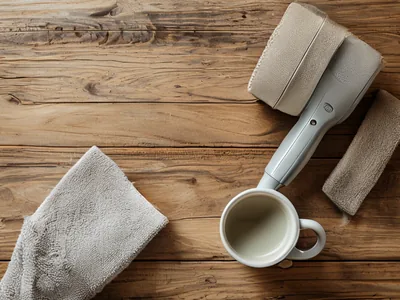
The way you dry your hair determines whether you wake up with defined curls or a cloud of frizz. To avoid damage, you should either plop your hair for 5-15 minutes or gently cup and scrunch the excess water from your hair with a cotton T-shirt or microfiber towel.
| Method | Best For | Primary Benefit |
|---|---|---|
| Towel Rubbing | Avoid this | Causes high friction and frizz |
| Microfiber/T-shirt | All curly types | Absorbs water without lifting the cuticle |
| Plopping | Wavy to Coily hair | Encourages volume and curl grouping |
Using a cotton T-shirt is a game-changer because it has a much smoother surface than a standard terry cloth towel. This prevents the hair fibers from snagging and roughening the cuticle.
- Gently squeeze excess water out of your hair using a microfiber towel or an old cotton T-shirt.
- Apply your styling cream or gel using a 'praying hands' motion to distribute product evenly.
- Scrunch upward toward the scalp to encourage curl formation and eliminate frizz.
- Air dry or use a diffuser on a low-heat setting to lock the shape in place.
Step-by-Step: The Ultimate No-Dryer Routine
To get perfect curls without a blow dryer, follow this specific sequence every time you wash. I started doing this last Tuesday, and it cut my morning prep time in half.
- Cleanse with Care: Apply your cleanser or co-wash to the scalp. Massage the roots for at least 60 seconds to ensure cleanliness, then let the suds rinse through the ends without scrubbing them. 2. Apply Product to Sopping Wet Hair: While still in the shower or immediately after, apply your leave-in conditioner or curl cream. The hair should be very wet to help the product distribute evenly. 3. The Scrunch Technique: Tilt your head forward and gently cup your hair in your hands, squeezing upward toward the scalp. This "scrunching" motion encourages the natural curl pattern to form. 4. Plopping: Lay a cotton T-shirt flat on a surface, pile your hair in the center, and tie the shirt around your head. Leave it for 5 to 15 minutes to absorb excess moisture while maintaining volume. 5. Final Set: Once the hair is almost dry, give it one final, very gentle scrunch to "lock in" the clumps.
This routine does not apply to hair that is extremely fine and easily weighed down by heavy creams; in those cases, you may need much lighter, water-based gels instead.
- After washing, apply a leave-in conditioner to soaking wet hair to lock in maximum moisture.
- Scrunch in a lightweight curl-defining gel while the hair is still very wet.
- Use a microfiber towel to gently 'plop' your hair onto your head, securing it with a soft band.
- Let the hair sit in the plop for 20 minutes before gently unfolding it to air dry.
Common Mistakes to Avoid
I used to think that the more product, the better the curls would be, but I quickly learned that heavy oils just made my hair look greasy rather than bouncy.
* Using Regular Towels: Traditional towels are too abrasive. Always switch to microfiber or an old cotton T-shirt to prevent frizz. * Neglecting the Scalp: Many people focus so much on the ends that they forget to massage the scalp. If the scalp isn't clean, hair health suffers at the source. * Touching Hair While Drying: Once you have scrunched your hair and it is in the drying phase, stop touching it! Touching wet curls breaks up the "clumps" and creates instant frizz. * Over-Cleansing: Washing with harsh shampoo every single day is often the primary cause of dryness in curly hair types.
When I tried this, I realized that rubbing my hair with a standard bath towel was the main cause of my frizz. I would definitely suggest switching to cotton or microfiber immediately to save your curl pattern.


Comments 0