Hair color at home dyeing routine: Guide to color longevity
"The chemistry of hair is as complex as the colors we choose to apply to it, requiring specific care based on texture and natural growth rates."
A successful hair color at home dyeing routine requires understanding how hair thickness and natural oils interact with chemical treatments. This guide covers how to prepare your scalp, manage different hair diameters, and maintain color longevity based on biological growth.
* Understand how hair thickness affects growth and dye absorption. * Prepare the scalp by managing natural sebum levels. * Navigate hormonal shifts and hair shedding during color changes. * Recognize the regulatory standards for chemical safety in dyes.
How does hair diameter affect a hair color at home dyeing routine?
A person stands before a bathroom mirror, holding a strand of hair between their fingers to assess its thickness. Because different hair diameters grow at different speeds, the way color settles can vary significantly between individuals.
According to the Royal Society of Chemistry PUIU, you can learn how to measure the diameter of your own hair using a laser pointer.
Thicker hair, defined as being greater than 60 μm, generally grows faster at a rate of 11.4 mm per month compared to thinner hair. For those with thinner hair, measuring between 20-30 μm, the growth rate is approximately 7.6 mm per month.
This difference means that roots may appear much sooner on thicker strands, requiring a different touch during application.
Understanding these variables is the first step in a successful dyeing routine by hair color. When the hair structure varies, the timing of touch-ups must be adjusted to maintain a seamless look.

Thinner hair strands often absorb pigment more quickly and can appear darker or more saturated than thicker strands. Conversely, coarse hair with a larger diameter may require longer processing times or higher developer volumes to achieve the desired color penetration.
How should I prepare my scalp before applying dye?
A person gently cleanses their scalp, mindful of the natural oils that accumulate over several days. Preparing the scalp is essential to ensure the dye adheres correctly without causing excessive irritation.
For the average adult, sebum builds up every 2–3 days. This natural oil can act as a barrier, so knowing the timing of your last wash is vital for consistent color. While some prefer washing right before coloring, others rely on this natural buildup to protect the scalp from chemical sensitivity.
Applying a dye-specific routine can help manage these natural oils. Using a specific dyeing routine by hair color allows you to balance scalp health with color intensity.
- Avoid washing your hair immediately before application to allow natural oils to provide a protective barrier.
- Perform a patch test on a small area of skin to check for sensitivity.
- Apply a thin layer of petroleum jelly around the hairline and ears to prevent skin staining.
What are the safety considerations for hair dyes?
A person reads the label on a new box of hair dye, looking for specific chemical warnings. Safety regulations are in place to protect consumers from harmful substances during the coloring process.
According to the European Commission, the Directive 2012/EU was adopted to ensure that hair dyes contain only safe substances by restricting the use of around 45 chemicals in hair dyes.
To ensure that hair dyes contain only safe substances, the European Commission adopted the Directive 2012/21/EU to restrict the use of around 45 chemicals in hair dyes. Following these regulations helps minimize the risk of scalp irritation or allergic reactions.
Always check for compliance with such standards when selecting a product. Knowing these regulations provides peace of much-needed peace of mind during home applications.
Always work in a well-ventilated area to avoid inhaling fumes and ensure you use gloves to prevent skin irritation. If you experience itching, burning, or swelling, rinse the product off immediately and discontinue use.
How do growth and shedding impact color longevity?
A person brushes their hair, noticing a few loose strands on the brush after a significant lifestyle change. Hair growth is a continuous process, but it is not uniform across all strands.

While it is commonly stated that hair grows about 1 cm per month on average, the reality is more complex because not all hair grows at once. Scalp hair has been reported to grow anywhere between 0.6 cm and 3.36 cm per month.
Because of these fluctuations, the timing for refreshing color can be unpredictable.
Furthermore, hormonal shifts can disrupt the cycle. Upon cessation of certain hormonal changes, it typically takes around two months for hormones to shift to normal settings, and hair shedding can increase for approximately 3–6 months until volume returns to normal.
As hair grows, the natural regrowth at the roots creates a visible line of demarcation, making the color appear less uniform. Natural shedding also means that colored strands are constantly being replaced by new, untreated hair, necessitating periodic touch-ups.
How to manage a hair color at home dyeing routine with biological changes?
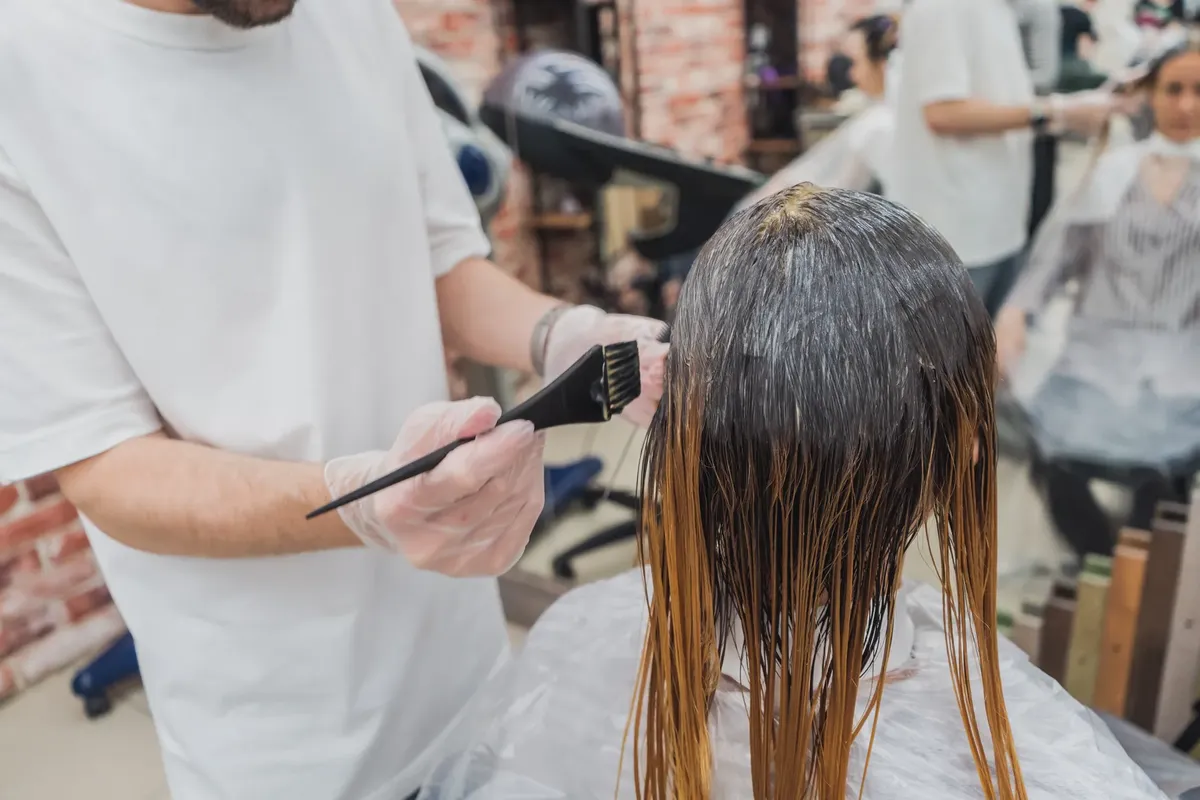
A person carefully applies dye to the roots, working in small sections to ensure even coverage. Managing the transition between natural hair and dyed hair requires a methodical approach.
- Assess your hair diameter to determine how quickly roots will become visible. 2. Cleanse the scalp to manage sebum levels, but avoid over-stripping natural oils right before application. 3. Monitor shedding periods to ensure the hair remains strong enough to hold the pigment.
I found that checking my hair thickness helped me decide how often to schedule my touch-ups. This level of preparation is key to a professional-looking result.
A limitation of these steps is that individual hair growth rates can vary significantly based on genetics and health, meaning the provided growth figures may not apply to everyone.
Changes in hormone levels or aging can alter hair texture, porosity, and pigment production. Adjust your choice of dye strength and conditioning treatments to accommodate shifts in how your hair absorbs and retains moisture.
Related
- Home hair dye routine guide: 7.6 mm How to protect strands
- Home hair dye tips: How to avoid dye mistakes
When should I reapply color based on hair chemistry? Color longevity depends on how the hair chemistry interacts with the dye and the natural growth cycle. Thicker hair, which absorbs dye differently, may show root regrowth sooner than thinner hair, necessitating a tailored touch-up schedule. The rate at which color fades is also influenced by the scalp's sebum levels, which can act as a protective layer against the dye's chemical action.
When hormonal shifts occur, the hair's ability to hold pigment can be temporarily affected. During the period when shedding increases, the hair structure might be less resilient to the chemical treatments involved in coloring.
Therefore, monitoring the hair's overall condition during these biological changes is a necessary precaution.
If the hair diameter is significantly different across sections, the dye absorption will not be uniform, leading to uneven color results. Careful assessment of these structural variations before application ensures a more consistent outcome for the hair color at home dyeing routine.
Reapplication timing depends on your hair's porosity; highly porous hair may lose pigment faster, requiring more frequent touch-ups. Monitor the fading of the color and the visibility of regrowth to determine the optimal window for your next application.





Comments 0